
This was my first visit to the British Museum—first being the key word here—because, much like the National Gallery, the British Museum is so vast and rich in history that it calls for multiple visits to truly appreciate everything it has to offer.
Located in the heart of London, the British Museum is a captivating place that brings the traces of the past into the present. As you enter for the first time, you are greeted by its massive columns and the stunning Great Court—a space that feels like a time capsule where historical treasures from different corners of the world are gathered together. Every corner transports you to a different era, telling stories of distant times.
“Walking through a modern doorway to discover the past… The Great Court of the British Museum evokes precisely this feeling.”
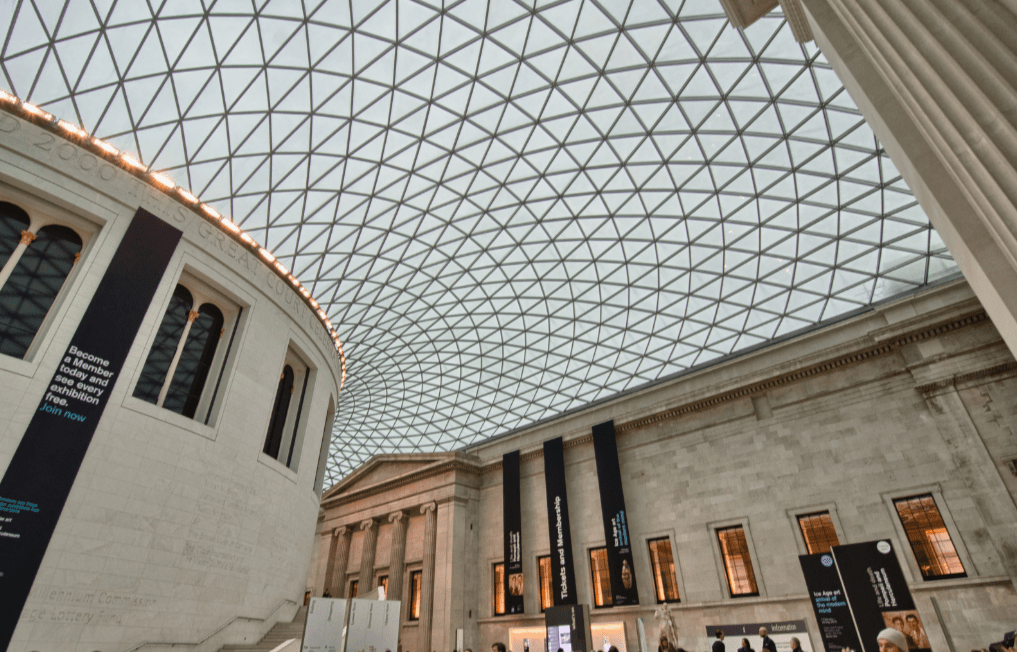
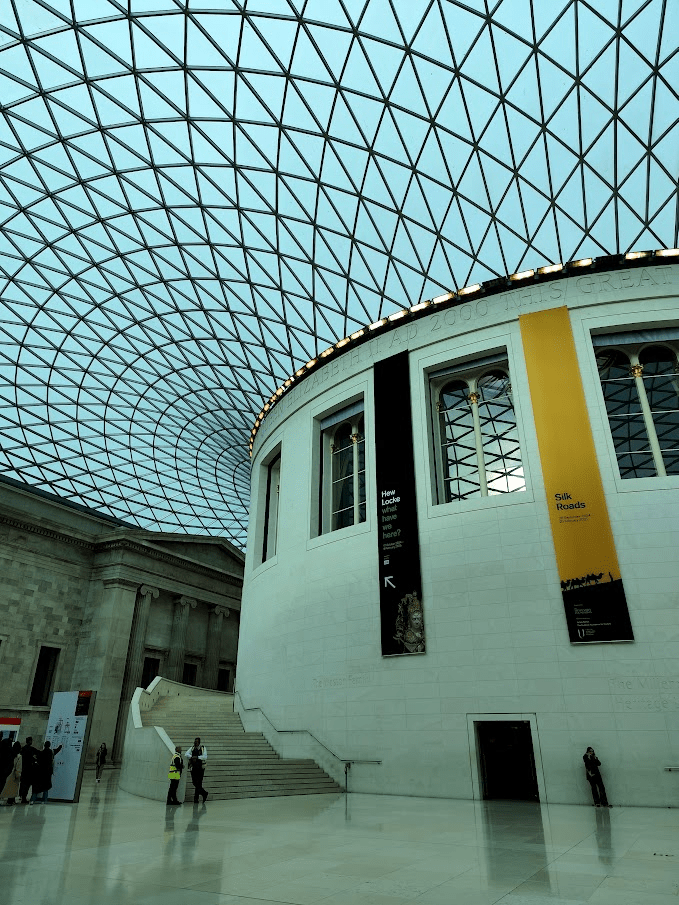
The moment you step into the museum, the stunning Great Court captivates you—a masterpiece showcasing how modern architecture can seamlessly complement historical structures. Designed by Sir Norman Foster, this immense glass ceiling consists of approximately 3,312 glass panels, blending the sky with the interior space. Sitting here and simply gazing at the ceiling is an experience on its own. At the heart of the museum is the Reading Room, which has hosted numerous renowned writers and academics throughout history.
“This library room, where knowledge and art converge, is one of the quietest yet most powerful corners of the museum.”
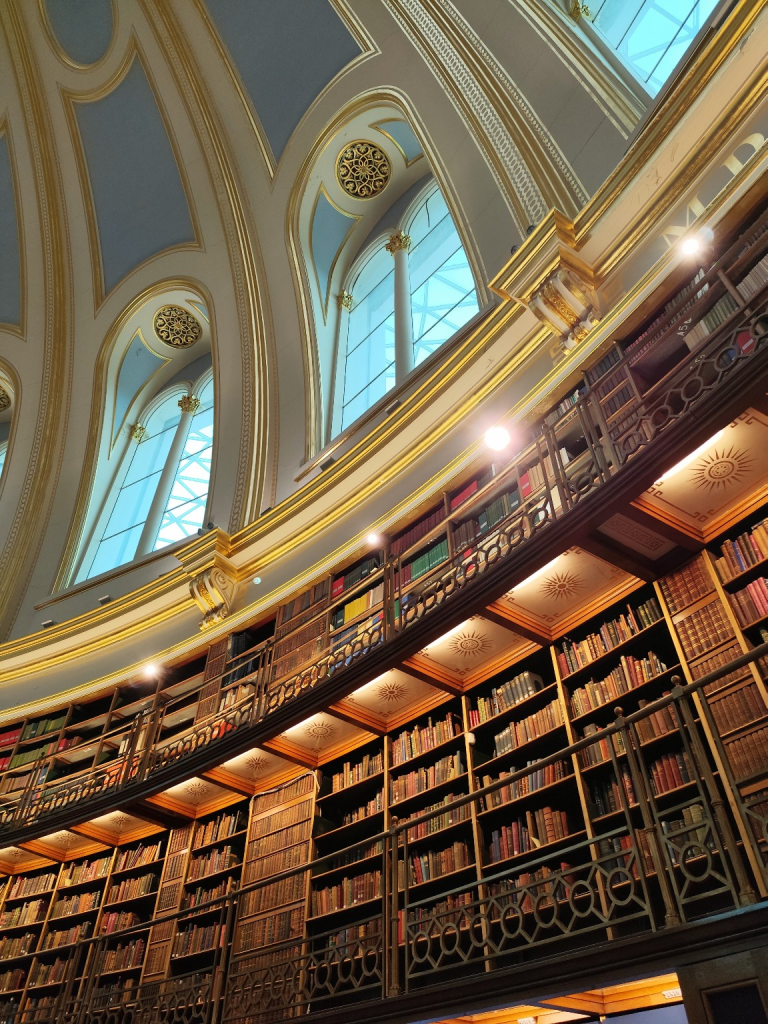
The Magnificent Reading Room of the British Museum
At the heart of the British Museum, this reading room offers a stunning visual feast with its neoclassical architecture and breathtaking dome. Once a workspace for great minds like Karl Marx and Virginia Woolf, this space is a unique historical treasure that radiates dedication to knowledge. Surrounded by books, following the traces of the past here feels like embarking on a journey through time.
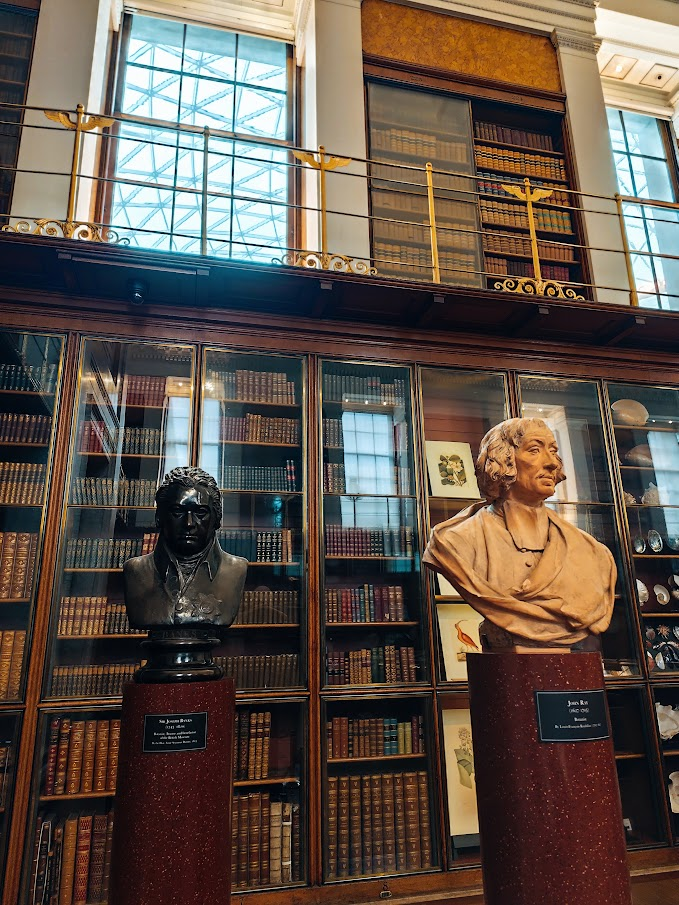
The Story of Sculptures and Books
In this space, where books and works of art intertwine, I felt as though I were in a timeless library. Two striking busts demand attention:
- On the left, Sir Joseph Banks (1743-1820): A famous naturalist and explorer, renowned for his contributions to botany during James Cook’s Pacific voyage.
- On the right, John Ray (1627-1705): Known as the father of natural sciences, Ray laid the foundations for modern plant and animal classification.
These two busts seem to pay homage to the history of science and discovery, while the towering bookshelves in the background symbolize the wealth of knowledge passed down through generations.
If you ever find yourself in London, make sure to visit this captivating museum. Who knows, you might just feel the echoes of the great thinkers who once roamed its halls!
 artfullifejourney.art.blog
Leave a comment