
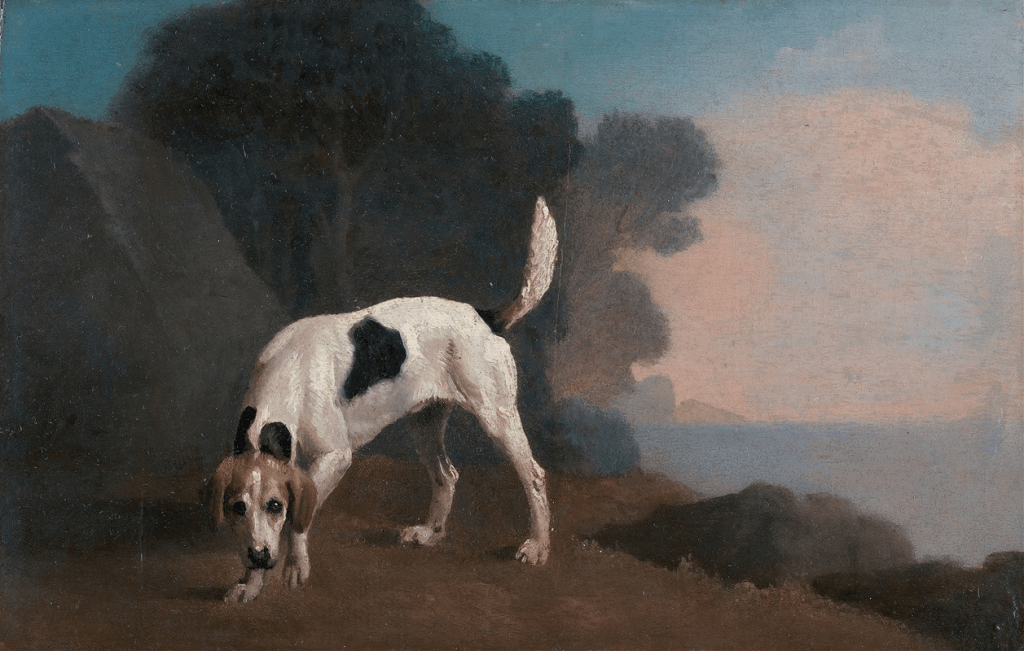
George Stubbs (1724–1806) was an iconic English artist celebrated for his groundbreaking contributions to animal painting during the 18th century. His work revolutionized the depiction of horses and other animals, combining a scientific approach with artistic mastery. Stubbs’ meticulous study of animal anatomy, including his famous work The Anatomy of the Horse (1766), demonstrated his unparalleled understanding of the form and movement of animals.
Stubbs’ paintings, primarily of horses, dogs, and other animals, were not merely portraits but were imbued with life and character. His works showcased the animals in naturalistic settings, capturing not only their physical traits but also their vitality and emotional presence. Horse racing and hunting scenes were particularly popular subjects, as they reflected the cultural interests of the time.
Widely regarded as the finest animal painter in England, Stubbs’ influence extended beyond painting to engraving and illustration. His works, such as Whistlejacket (1762), remain celebrated for their exquisite attention to detail and their contribution to the history of British art. Stubbs’ legacy as an innovator in both art and scientific observation continues to inspire artists and animal enthusiasts alike.
 artfullifejourney.art.blog
Leave a comment