
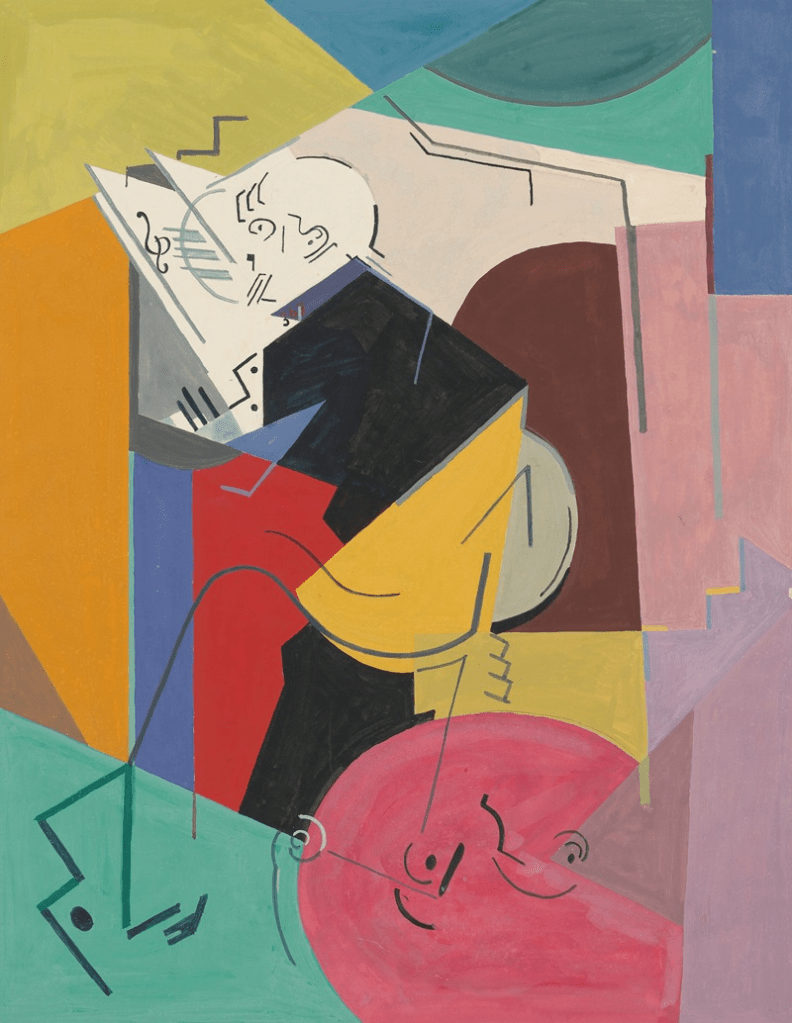
Albert Gleizes (1881-1953) was a French painter and one of the pioneers of the Cubist movement, which revolutionized the way artists approached representation and space. He was an essential figure in the development of modern art, helping to break away from traditional methods of perspective and composition.
Gleizes studied at the Académie des Beaux-Arts and quickly became involved in avant-garde movements. Along with artists such as Georges Braque and Pablo Picasso, he played a significant role in the formation of Cubism. His early works were influenced by Impressionism, but as he explored abstraction, he began to focus on the fragmentation of forms, the reduction of objects into geometric shapes, and the exploration of multiple perspectives within a single composition.
His most well-known works are characterized by dynamic, faceted compositions that depict the essence of their subjects without relying on realistic forms. In pieces such as The Domine, Gleizes employed his distinctive use of fractured space and color to create a complex, layered depiction of his subjects. These works often evoke a sense of movement and rhythm, reflecting the modern industrial age.
Throughout his career, Gleizes was not just a painter, but also a writer and theorist, helping to articulate the principles behind Cubism. His influence on the art world extended beyond his lifetime, and he remains an essential figure in the history of 20th-century art.
 artfullifejourney.art.blog
Leave a comment