
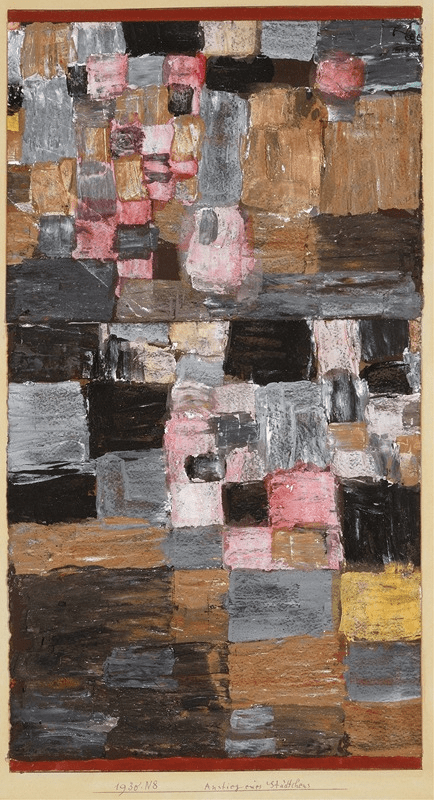
Paul Klee (1879–1940) was a German-Swiss artist whose work is renowned for its innovative approach to color, form, and abstraction. Klee’s art, which spanned a variety of styles including expressionism, cubism, and surrealism, was deeply influenced by his background in music and his interest in the subconscious. Throughout his career, Klee sought to express emotions, dreams, and the inner workings of the human psyche through his visual language.
Klee’s technique often combined vivid color palettes, geometric shapes, and whimsical, childlike imagery. His abstract works, such as Twittering Machine and Senecio, explore the relationship between lines, shapes, and colors, creating an almost mystical connection between the viewer and the artwork. Klee’s playful yet profound style led him to become a key figure in the development of modern art in the 20th century. His legacy endures as a pioneer in bridging the gap between representational and abstract art, leaving behind an influential body of work that continues to inspire contemporary artists.
 artfullifejourney.art.blog
Leave a comment