
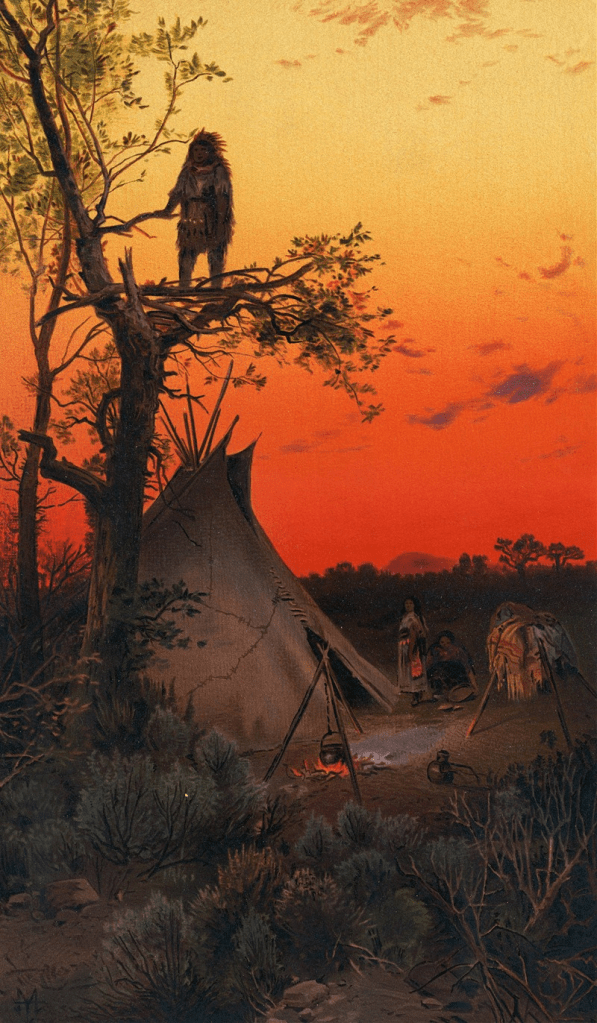
Thomas Moran (1837–1926) was an influential American artist, best known for his breathtaking landscapes that captured the grandeur and beauty of the American West. Born in England and immigrating to the United States as a child, Moran’s early exposure to both European artistic traditions and the American wilderness profoundly influenced his work.
Moran’s art is characterized by his dramatic use of color and light to convey the vastness of the American landscape, especially in the western territories. His most famous works feature iconic scenes from Yellowstone National Park and the Grand Canyon. As a skilled colorist, Moran infused his landscapes with rich hues that emphasized the sweeping scale of nature, giving his paintings a sense of awe and magnificence.
Moran’s mastery of both oil painting and watercolor allowed him to capture the rugged textures of the terrain and the shifting moods of the natural world. His work played a significant role in the promotion of the National Parks system, particularly through his collaboration with the U.S. government in documenting the geological wonders of the American West.
Through his breathtaking depictions of unspoiled nature, Thomas Moran became one of the most important figures in American art, known for his contribution to both the landscape genre and the preservation of the nation’s wilderness.
 artfullifejourney.art.blog
Leave a comment