
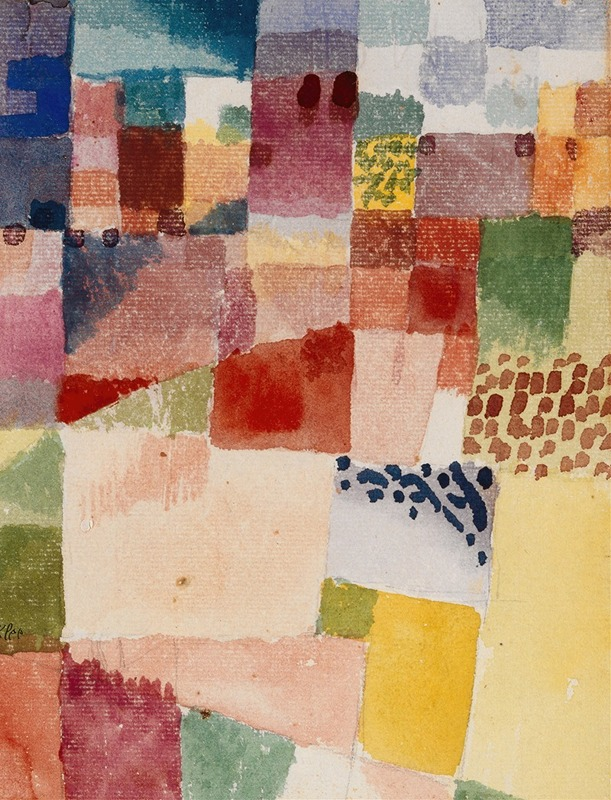
Paul Klee (1879-1940) was a Swiss-German artist whose work profoundly influenced the development of abstract art in the 20th century. Known for his unique use of color, line, and symbolism, Klee’s paintings are a harmonious blend of imagination and precision. He often combined elements of surrealism, expressionism, and cubism, while drawing inspiration from childlike art, as well as folk art traditions.
Klee’s work explores themes such as the mystical, the emotional, and the poetic, often creating visual poems that defy easy interpretation. His time as a teacher at the Bauhaus School in Germany allowed him to experiment with new artistic techniques, incorporating geometric forms and innovative perspectives that set him apart from other artists of his time.
Today, Klee’s legacy endures as one of the leading figures of modernism, and his works remain celebrated for their imaginative depth and creative freedom.
 artfullifejourney.art.blog
I love the colour and childlike quality of a lot of Paul Klee’s work.
LikeLike
The childlike lightness and harmony of colors in Paul Klee’s works are truly captivating. Thank you for sharing your valuable thoughts.
LikeLike